Previous
Next
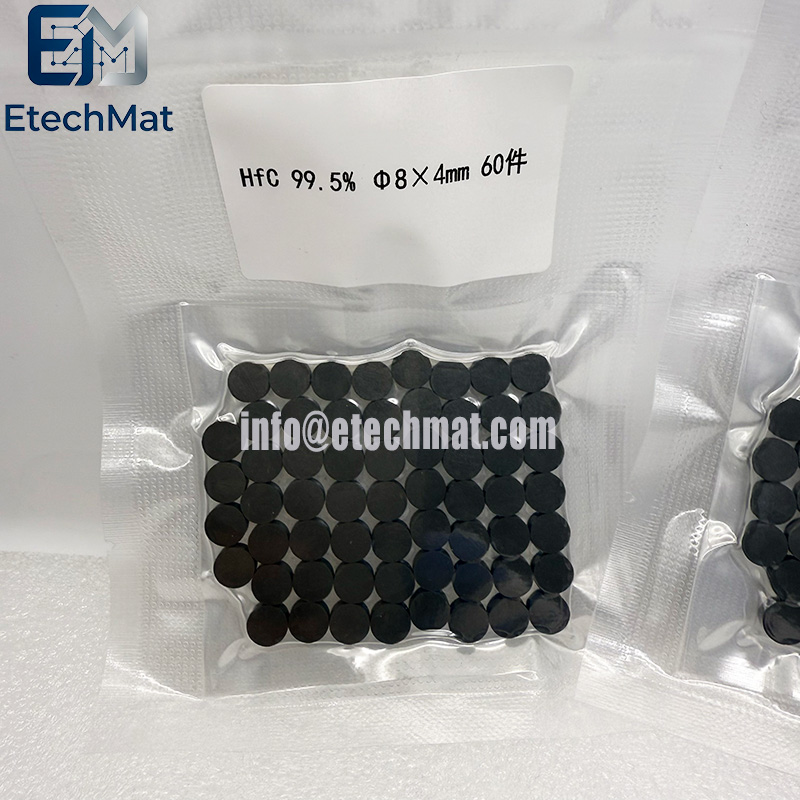
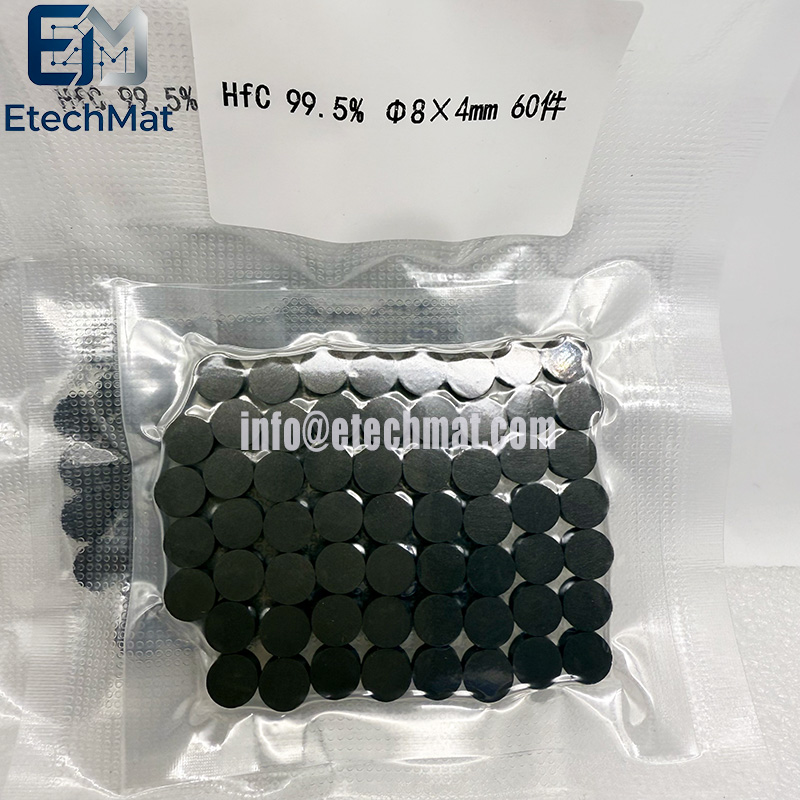
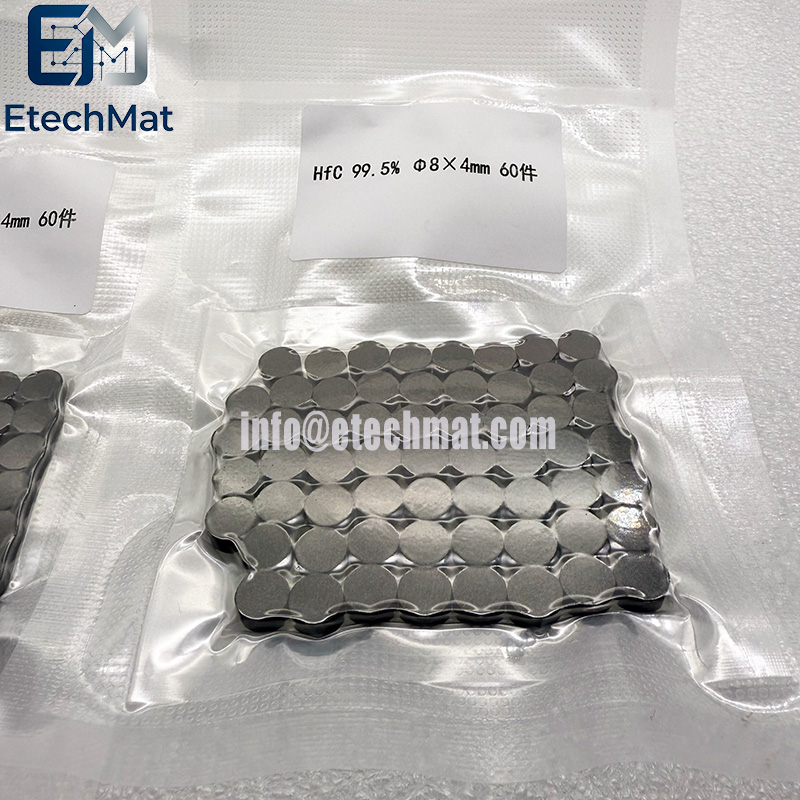
4 mm×8 mm HfC Pellet
Description of 4 mm×8 mm HfC Pellet
Hafnium carbide stands out for exceptional hardness and high‑temperature stability, widely used for small‑batch thermal‑spray and e‑beam evaporation work. Compact pellet formats bring their own challenges; uneven density or tiny internal cracks from sintering can cause spitting or inconsistent vaporisation, skewing thin‑film test results in precision‑focused lab environments. Our 4 mm×8 mm HfC pellet is sintered under tightly controlled conditions to achieve uniform density and minimise internal defects. These compact pellets work well for electron‑beam evaporation and small‑scale deposition, producing high‑performance hafnium‑carbide‑based films for high‑temperature coating research and material‑characterisation studies. Every pellet undergoes dimensional spot‑checks and surface quality screening before packaging. Tailored for laboratory‑scale deposition equipment. Its consistent physical properties help stabilise evaporation behaviour, supporting reliable and repeatable test outcomes for your high‑precision material development projects.
Features of 4 mm×8 mm HfC Pellet
1. 4 mm × 8 mm hafnium carbide pellet
2. High‑density HfC for evaporation
3. Exceptional hardness for wear-resistant films
4. Excellent thermal stability for high‑temp use
5. Ideal for ultra‑high temperature coatings
6. Uniform composition for consistent deposition
7. Low impurity for advanced thin‑film quality
8. Suitable for electron‑beam and thermal evaporation
9. Supplied with purity and density certificates
10. Vacuum‑sealed for immediate use
Applications of 4 mm×8 mm HfC Pellet
Aerospace: Used to manufacture rocket nozzle throat inserts and nose cones for spacecraft atmospheric re-entry; a key material for withstanding extreme temperatures.
Nuclear Industry: Can be used for nuclear reactor control rods.
Industrial Sector: Used for cutting tools, molds, high-temperature linings, and electrodes for arc or electrolytic applications.
🧪 Preparation and Morphology
Preparation Method: Typically produced as a powder by reacting hafnium dioxide (HfO₂) with carbon at high temperatures (1900–2300°C) in an inert or reducing atmosphere; the powder is subsequently consolidated into high-density ceramic bodies (pellets) via hot-press sintering or hot isostatic pressing.
Product Form: Commercially available HfC powders range in particle size from the nanoscale to tens of microns, with purities typically between 99% and 99.5%; they can be directly pressed into target pellets or structural components of various specifications.
⚠️ Precautions
Chemical Stability: Stable at room temperature and insoluble in cold water; however, it reacts with chlorine at high temperatures (above 250°C) and with oxygen at temperatures above 500°C to form hafnium dioxide.
Storage Requirements: Store in a sealed container in a cool, dry environment; prevent moisture-induced agglomeration and avoid contact with oxidizing agents.