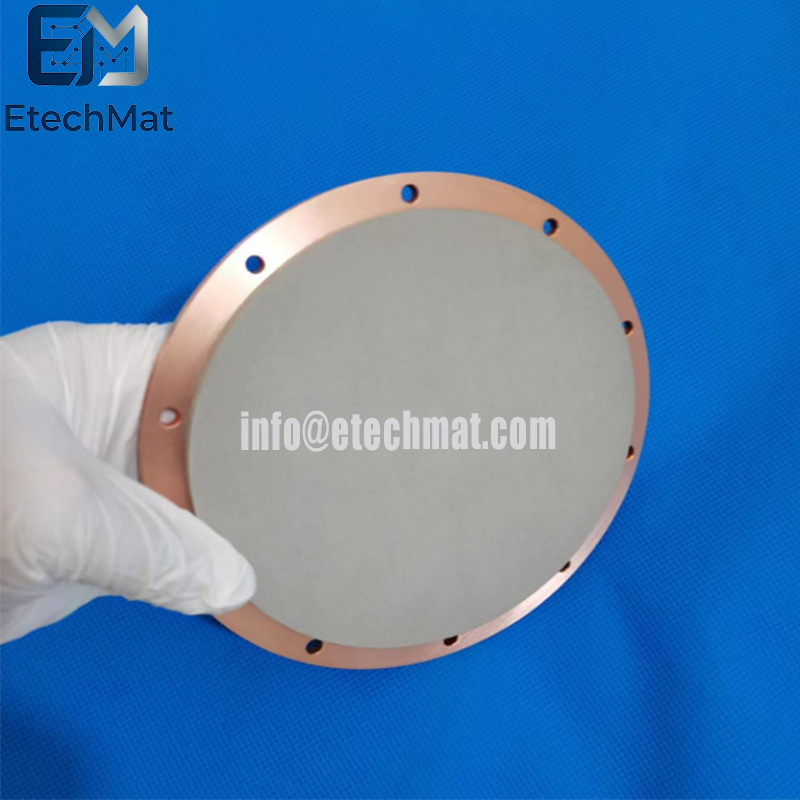
In conventional DC (diode or magnetron) sputtering, the sputtering target serves as the cathode and is connected to the negative terminal of the power supply, whereas in RF or MF AC sputtering, the electrode role of the target switches periodically.
Electrode Roles During Sputtering
Sputtering equipment typically features two electrodes: a cathode and an anode. The sputtering target generally functions as the cathode, while the corresponding electrode acts as the anode. When high voltage is applied between the two electrodes, a rarefied gas (such as argon) is ionized to form plasma. Driven by the electric field, positive ions within the plasma accelerate toward the target (acting as the cathode) and eject target atoms through collision.
Roles in Different Sputtering Modes
DC/Diode Sputtering: The target acts as the cathode and the substrate as the anode; positive ions bombard the target to achieve sputtering.
Magnetron Sputtering: The target is typically configured as the cathode (negative potential); a magnetic field is employed to enhance plasma density and improve sputtering efficiency.
RF Sputtering: The polarity of the electric field reverses periodically, causing the target to alternate between cathode and anode roles; this primarily addresses the issue of charge accumulation on insulating targets.
MF AC Sputtering (Twin-Target): Two targets alternately function as cathode and anode; while one is sputtering, the other helps neutralize the charge.
Why the Sputtering Target Is Not the Anode Material
As clearly demonstrated by the sputtering process described above, the sputtering target acts as the cathode rather than the anode. The primary reasons are as follows:
1. Target of Ion Bombardment: The core principle of sputtering involves using ion bombardment to eject atoms from the target material. Under the influence of the electric field, positive ions move toward and collide with the cathode (i.e., the sputtering target), thereby establishing the target's role as the cathode within the sputtering system. 2. Material Characteristics and Functions: The selection of sputtering targets is primarily based on their ability to supply the required species of atoms for deposition and on their intrinsic physicochemical properties—such as purity, density, and crystal structure. These properties differ fundamentally from the functional requirements of an anode material during the sputtering process.
⚠️ Distinguishing between "Material Properties" and "Electrode Roles"
A common point of confusion arises here: the term "cathode material" refers to an electrode function rather than an intrinsic property of the material itself. The same target material (e.g., copper or ITO) can serve as a cathode in certain sputtering configurations, yet act briefly as an anode during an RF cycle. Therefore, strictly speaking, a target material does not inherently "belong" to the category of cathode materials; rather, it is configured to function as a cathode in the majority of sputtering processes.