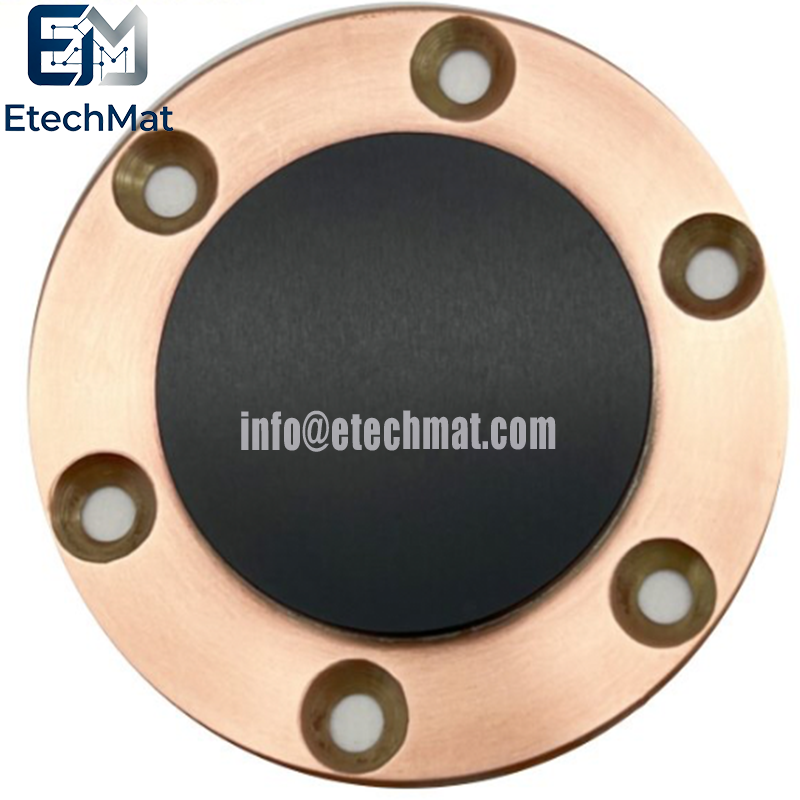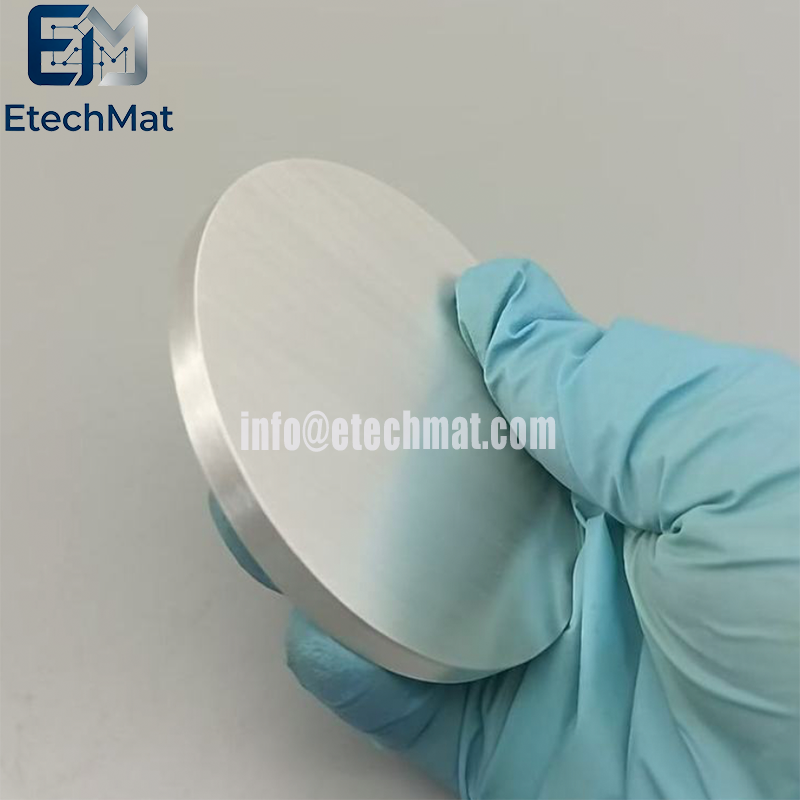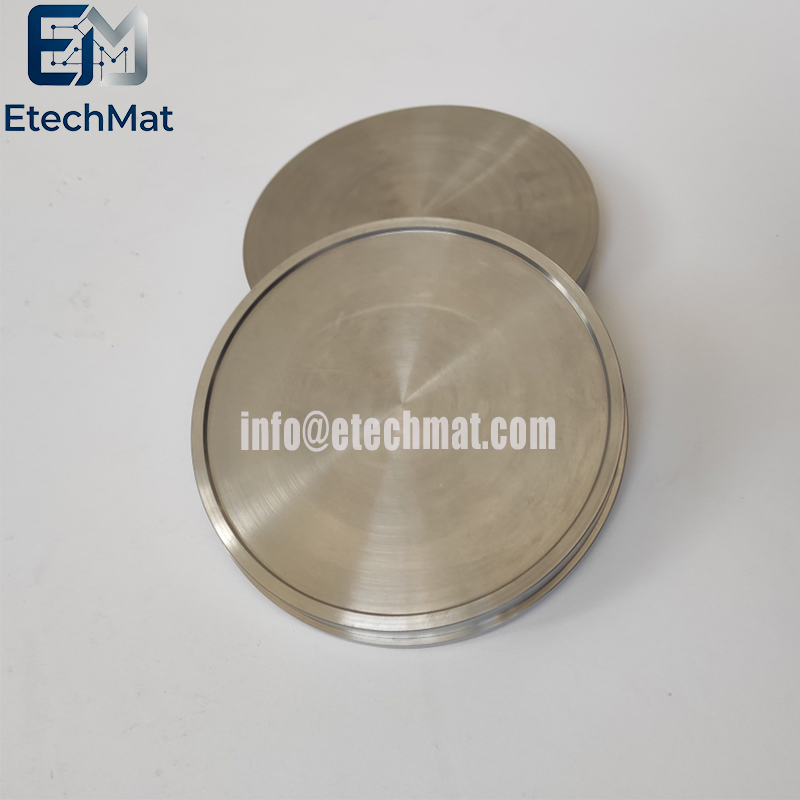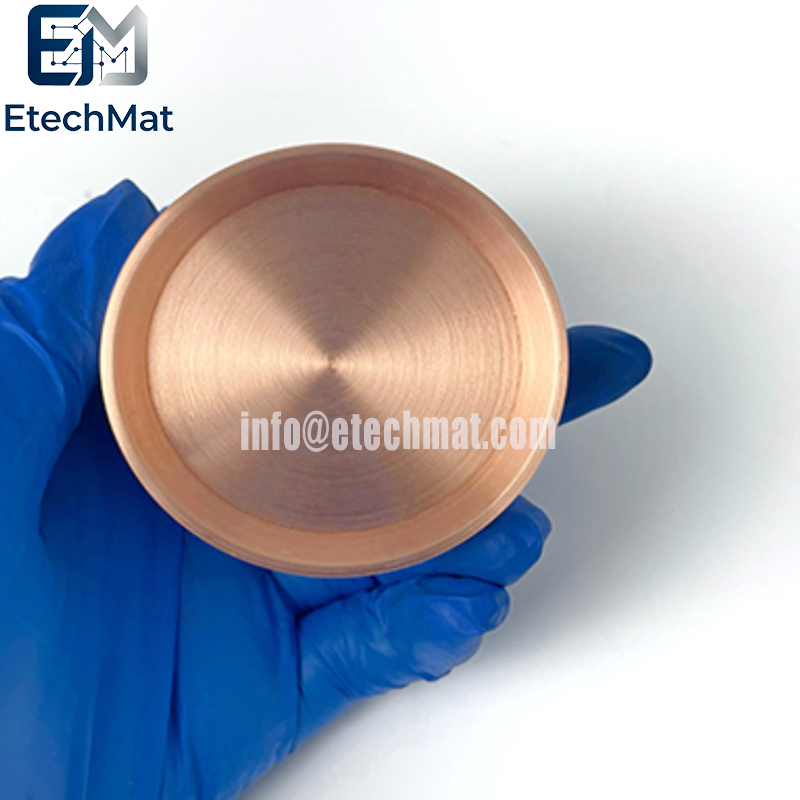
ITO stands for Indium Tin Oxide and is composed of indium, tin, and oxygen in varying proportions. The material composition of ITO and ITO sputtering targets is identical; the latter is essentially a dark-gray ceramic semiconductor formed by mixing indium oxide and tin oxide powders in specific ratios.
Manufacturing Methods for ITO Sputtering Targets
Vacuum Hot Pressing: This method utilizes thermal and mechanical energy to densify ITO powder, producing high-density ITO ceramic targets (91%–96% of theoretical density). It allows for the easy production of ITO targets that approach the target density with near-zero porosity. However, due to limitations regarding equipment and mold dimensions, vacuum hot pressing is less advantageous for manufacturing large-sized sputtering targets.
Hot Isostatic Pressing (HIP): HIP produces ITO sputtering targets through sintering under pressure or applying pressure at high temperatures. Similar to vacuum hot pressing, HIP yields products with high density (approaching the theoretical limit) and excellent physical and mechanical properties; however, it is constrained by equipment pressure limits and the size of the pressure vessel.
Pressureless Sintering: This method involves fabricating a high-density target via pre-compaction, followed by sintering under controlled atmospheric and temperature conditions. Strict control over the atmosphere and temperature prevents grain growth and improves the uniformity of grain distribution. Its greatest advantage lies in the ability to produce large-sized sputtering targets; however, compared to other sintering methods, targets produced this way have lower purity.
Cold Isostatic Pressing (CIP): CIP operates at room temperature, using rubber or plastic as the mold material and a liquid medium to transmit ultra-high pressure. CIP is also capable of producing larger ITO sputtering targets. Furthermore, it is cost-effective and suitable for mass production. However, CIP entails significant risk, as the material requires high-temperature sintering (1500–1600°C) in a pure oxygen environment at pressures of 0.1–0.9 MPa.
Applications of ITO Sputtering Targets
ITO sputtering targets and their derivatives—such as ITO thin films and ITO glass—find widespread application across various industries. ITO targets are commonly used to manufacture transparent conductive coatings for displays, including liquid crystal displays (LCDs), flat-panel displays, plasma displays, and touch panels. ITO thin films are utilized in organic light-emitting diodes (OLEDs), solar cells, and antistatic coatings. Beyond the electronics industry, ITO targets are also used for various optical coatings, most notably infrared-reflective coatings and the glass for automotive sodium-vapor lamps.
ITO Targets / ITO Thin Films / ITO Conductive Glass
These three terms are interconnected. Simply put, ITO conductive glass is produced by depositing a layer of ITO thin film onto a sheet of ultra-thin glass via sputtering or evaporation. In this process, the ITO target serves as the source of indium tin oxide atoms; when these atoms are deposited onto the substrate (glass), an ITO thin film is formed, and the resulting glass is known as ITO conductive glass.